87 Hudsons Rd, Spotswood; (03) 9391 6016 I wonder sometimes how a cafe owner approaches the challenge of doing something 'different' for breakfast. You could throw some unusual ingredients into an omelette, sure, but to do something truly inventive - particularly in this town - means thinking outside the box, circle, square and geometry itself.
Duchess of Spotswood have thrown out the set square and come up with an equation where inventive + quality = a cafe worth crossing town for.
First of all, they're in a suburb off the beaten cafe track. Most of Melbourne's cafe afficionados are going to have to travel to get there (and to those already living in Spotswood - lucky you!). That the blogosphere is, regardless, alight with praise for their British-influenced menu tells you the effort is worth it.
Two words: pork neck. For breakfast. That's thinking outside the box. It involves rather more effort than frying bacon to order. The Duchess' menu manages to put the 'slow' back into break-fast, but the presentation speaks of simplicity and flavour, rather than convolution and complexity.
Here's their version of muesli: Served on a wooden board, the 'muesli bar' is one to eat with fork, not fingers. It's a conglomeration of nuts, oats, puffed rice, dried fruit and other morsels of goodness, held together with something sticky - honey or golden syrup - that has the sweet dial turned to spot-on. On the side is creamy yoghurt and seasonal fruit.
See, simple: ingredients and process aren't too out there, but presentation has a big wow factor, without being intimidating or sacrificing satisfaction.
I love black pudding, but I'm not going to order it just anywhere. With a kitchen pedigree that includes the Station Hotel in Footscray and The Botanical, I was comfortable that I, and the piggy before me, would be in safe hands. And we were. I know it's not to everyone's taste, but chef Gale's version is light and delicate with cinnamon. The eggs are from Villa Verde in Mitcham and, honestly, you could simply have had these two orbs all on their own. Perfectly poached and bursting with bright-orange yolk.
The bread is from Zeally Bay in Torquay. I had ciabatta with a steak-knife crust on my plate, along with a pot of whipped butter (it's the little things). Our next-table neighbours had the avocado and goats cheese sprinkled with fresh herbs and broad beans, served on thin crusty bread. Even the toast is selected to match the meal.
Other options include the wonderfully named Breakfast of Champignons, with mushrooms and Stilton. Giddy up.
So, get out of the box and out of the city. You'll be rewarded.
31 January, 2011
Duchess of Spotswood


24 January, 2011
'See Naples and Die' - Penelope Green
 It was en route to reviewing this book that I came to my musings on the travel writing genre in the previous post. Many of its elements, good and bad, tick the boxes of the classic characteristics of the genre.
The fact of moving overseas for a dramatic change does not imbue the traveller with the skills of a writer. Notwithstanding the fact that many, including Green, who release travel books have a background in journalism, it's a huge challenge to filter an intense set of experiences into a coherent story with a point.
Green is not as new to the style as her name suggests. She has produced three books about living in Italy, the first about her time immediately after arriving in Rome, friendless, jobless and languageless. This is the second, and it's followed up by a third account of living on an island off Naples with her Italian partner (who she meets in this book).
Her purpose in this second instalment moves beyond mere recounting of a foreigner's experiences abroad. Naples is a complex, scary, passionate, intimidating and beautiful city, and Green wants to use her time there to understand it. She uses her contacts and journalistic nous to interview many prominent Neapolitans. Coming to terms with the city - and its equal parts chaos and charm - is a neat allegory for a woman in her 30s trying to choose the right track on which to set the wheels of her life.
It's tough, though, producing a book like this. You need the reader to understand your environment, but too often Green recounts anecdotes without weaving them into a greater narrative. The book wouldn't be interesting enough if it were simply a set of stories about meeting friends in bars - that would amount to a set of emails from a travelling friend - but it wouldn't be a travel narrative if she simply presented her research into the Camorra and Naples' insidious criminality. It's hard, too, to balance details of a one-night-stand with a local against interviews with the city's mayor and her plans for another term in office.
You can tell, too, that while the book purports to be a chronological report of her first year in Naples, it jumps around a lot more than that. And fair enough - this isn't a set of emails sent weekly to friends and family. This is a compilation, a condensed version of events, and it's fine to conflate something that happened in April with a related encounter from October. What's curious is that every 'real-life' figure Green encounters - by which I mean a public figure, rather than one of her friends - is re-introduced at each mention. Rosa Russo Iervolino, for example, is always introduced with the apposition 'mayor of Naples'; whereas I'd lost track of her first-name-only friends by about the third chapter. The repetition makes it easier from an editor's point of view, but it also removes the reader from the conversation, because it's like the author can't remember what they've already told you.
The language issues always intrigue me in a story like this. Green more than once bemoans her 'deteriorating Italian' - her work in Naples is editing English-language articles for a Mediterranean-news website. Yet she's interviewing the mayor, senior church figures, lawyers, victims, and recording their experiences with dextrous language. I'm so curious as to how that comes about, and wish the narrative would 'lift the veil' once in a while to mention the whirr of the tape recorder in the room, or explain what's been paraphrased, not to mention who did the eventual translation.
The book is somewhat overrun with Italian translations, much like a guidebook. Years ago in Italy, it amused my travelling companion and me no end when the Lonely Planet guide bothered to translate Piazza di San Marco to St Mark's Plaza. Some of Green's translations are similarly obvious, though she does also make an effort to include and explain aphoristic gems from the Neopolitan dialect.
To give credit where it's due, Green does undertake a heroine's journey. She decides upon commencing her job in Naples not to focus on socialising with her work colleagues - she'd rather keep that relationship professionally separate. That's commendable - I'd be grabbing at any chance of companionship that was on offer. Obviously Green is made of stronger social stuff than that, and gathers an admirable posse during her time including, inevitably for the genre, an Italian love (Alfonso).
I think some examples of travel writing are better for those who haven't ventured far from home. A lack of empathy can imbue these tales with a fantastical, gripping element. If I'm honest, I can't help feeling a level of competitiveness when following a heroine's travel journey, and sometimes what I want is exactly what wouldn't sell books - more of the fear and failings that must accompany the author's audacity and success.
Have travelled, will write
Many years ago, when I worked in a bookstore, a woman asked me for our travel narrative section, because that was 'pretty much all' she read.
I was surprised, not thinking there'd be enough on offer to sustain such a predilection. Now, I'd consider that customer overwhelmed for choice.
While the genre is broad, two types of titles dominate: women who move, usually alone, to a Mediterranean idyll; and men who set out on a journey, courtesy of a challenge.
In the case of women's travel writing especially, it fits squarely into the niche of aspirational literature. The books are successful because of their destinations, because of their romance, not simply because they offer well-told stories. You can be sure that Eat Pray Love would not have been the runaway seller it is if one of the 'I' countries that Elizabeth Gilbert travelled to had been Iceland, rather than Italy.
It's intriguing that the women's stories usually involve relocation, leaving something behind, becoming connected with a new community, and, more often than not, finding love. The men are  rarely so stationary. Think Charley Boorman and his innumerable trips around the globe on unusual types of transport; Tim Elliott and his Spanish search to unravel the myth around bullfighter Jesulín; and Tony Hawks' bizarre determination to travel around Ireland with a fridge. Unlike the women, they often leave intact, rather than broken, relationships behind, yet conversely they seem absent from their experiences rather than integral.
What I realise, thinking through these typical storylines, is that what we see repeatedly in travel writing is the heroine's and hero's journeys. In the former, the heroine must reject a mother-figure (her homeland) and seek a new environment, where she comes to an emotional nadir (feeling trapped in an unwelcoming city, but not ready to return home) before piecing their life back together (new job, new love) and embracing their animus (through the stoicism of staying and finding acceptance).
The hero, on the other hand, is presented with a challenge (the fridge, the bullfighter, a rowboat), which at first they resist (how will I carry a fridge? or, My wife would never agree) before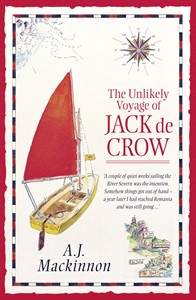 taking it on and receiving help along the way (people who write travel books invariably encounter the friendliest people in any part of the world). They emerge from the supreme battle (near death at the hands of a freighter, hangovers) to return with the boon (often a fresh understanding of culture).
This consistently different emphasis between the genders in travel writing had always puzzled me, but, oddly, I think this analogy might have solved it. To travel is to journey, and the journey has been the foundation of storytelling for centuries. I wonder often why the same type of experience continues to sell travel books, but it's because it taps into a sub-conscious resource of familiar stories.
When I started this post, I wasn't planning to write about heroes and heroines at all - it wasn't until summarising the types of travel writing that the link occurred to me. What I was going to write about was how far short so many travel books fall of the mark of being a good book. Setting and circumstance are what sell, rather than the quality of how the author tells it. Not everyone who treechanges to an overseas locale writes a book about it, and not everyone who does has the ability to tell the tale well. What they have is the licence to share the experience.
Another w(h)ine
 We've had the Inequitable Wine Experience, easily explained by the fact that we were in a cheap noodle joint, where just getting served is more important than matching wine glasses. And we were northside - you expect odd and surly. It was the other side of the river, however, that offered up the Weird Wine Experience.
Journeying far from our native Brunswick for a friend's farewell drinks, we found ourselves near a distant shoreline, at a pub called Hotel Nest (formerly, I'm told, the Red Eagle) in Albert Park. It's Saturday night. It's a warm day. We're out for classy drinks in a pub full of frills, heels and Marc Jacobs. So I ask, 'Can I see a wine list?'
Bartender: No, we don't have one, sorry! But I can run you through it. What do you want?
Me: Well, I want to see a wine list so I can choose. Never mind, I'll have a beer.
A glance at the taps - Pure Blonde, Kroenenburg, not a boutique brew in sight - has me turning back to the bartender.
Me: OK, what's your house white?
Bartender: We've got quite a few! There's a sav blanc, a riesling, a pinot gris, a chardonnay, a verdelho, gewurztraminer...
Me: Fine, what's the pinot gris?
Bartender: Well, we've got two...
By now, I feel like I've moved into some bizarre dichometric puzzle. After minutes more discussion, we came away with a glass of Innocent Bystander pinot gris, and a pot of Asahi, served in the kind of cheap, ridged glass I'd expect to see at a fill-your-own-water station in a cafe, for $18. (So asking if they had anything for $6 a glass probably wouldn't have got me anywhere!)
I have the feeling that if you'd asked for the wine list when the venue was the Red Eagle you probably would have been asked not-so-politely to leave, or at least to harden the fuck up and order a pint. You can't do either now, since they also don't serve beers in 'big' glasses. But seriously, if it were the Red Eagle and the wine on offer was from either of the casks you could see perched between the pitchers behind the bar, I could understand them not wasting the ink. Otherwise, print the darn thing out!
09 December, 2010
A standard drink
SG and I headed out for a mid-week local noodle fix. The venue of choice was Noodle Kingdom, but the discussion here is not about their hand-stretched specialty, nor the enormity of their serves, nor the bizarrely relative pricing of items on their menu ($11.80 for a plate of veg, $9.90 for beef and noodle soup).
No, the discussion here is on the relativity of their wine serves. To accompany our steamed beef dumplings (each of the half dozen the size of a mouse your cat would shy from) and spicy pork with fried noodles, I ordered a glass of the house red (at $22 a bottle, you can eat for two, have leftovers for lunch and get nicely tipsy for under $40) and SG a glass of the slightly pricier sav blanc.
Here's what we were served:
Luckily it was the owner of the glass on the left who was driving home.
06 December, 2010
Pope Joan
77-79 Nicholson St, Brunswick East; (03) 9388 8858
I have a new favourite breakfast.
Pope Joan opened mid-year, with an owner pedigree that ensured a smart fitout, a canny and classy menu, and the kind of publicity that generates a half-hour wait for a table on the first Saturday they were open.
The co-owners hail from Circa (Matt Wilkinson) and the Kent Hotel in Carlton (Ben Foster). They've got plenty of room to play with on site. Behind the plate-glass front, round wooden tables plus a communal table affront the prep area, with extra kitchen space at the back. To one side, a covered area offers bench seating, while down the back a garden space is filled with luminous artifical grass, reclaimed school tables and a tidy herb garden.
The menu is succinct, paying particular homage to the egg. Lunch specials are written up each day, such as a roast chicken sarnie, with stuffing, served swaddled in foil so all the warmth and aroma stays in until you're ready to eat.
That's just one example of their attention to detail when it comes to presentation. It's not just the food: waitstaff deliver water from divine, floral-printed jugs. Then there's this take on rice pudding: The creamy pudding, with not a crunchy piece of rice in sight, is studded with vanilla. Mango on top sweetens it up and stops the dish being too sickly.
I went the boiled eggs, and this is the dish that had me exclaiming with delight:
You've got two boiled goodies, buttered soldiers, herbed salt and bacon bits. Is there any flavour better than egg and salt? And what fun to put together! The only thing that could have improved it would be the egg equivalent of a 'caramel stop'. Both eggs were piping hot, so there was no chance of keeping the yolk runny for the duration.
And how much would you expect to pay for such breakfast enjoyment, replete with bespoke serving dish? It's just $9.
03 December, 2010
'The Accidental Billionaires' - Ben Mezrich
 I made it 30 pages into this book. So, this is not a fully informed review, just an impression of the elements that made it impossible for me to carry on.
The Accidental Billionaires is the book on which David Fincher's movie The Social Network was based: the story of Mark Zuckerberg, his relationship with Eduardo Savarin, and the early days of Facebook.
Zuckerberg was working with the formidable Winklevoss brothers: identical twins from serious money who went on to row for America at an Olympic level. The brothers, along with a business partner, wanted to build Harvard Connection, a way of 'putting Harvard's social life online'. The brothers spent most of every day on the water, in class or asleep, and wanted a way to meet girls.
A lot of this story (as told both in the film and in what I read of the book) seems to be about girls. It's testament to Facebook's phenomenal popularity that it's hard to comprehend that the Winklevoss' idea was actually a groundbreaking one, so embedded is what they propose in our current interactions. The flaw in their original idea for me (other than the fact Zuckerberg ended up taking the idea, expanding it and releasing Facebook), was that it wasn't going to increase the time they had available to socialise, at least face to face. Instead they were going to network online, and maintain their schedule of six hours of rowing and as many of classes each day, while their relationships progressed over the internet.
Somehow, the Winklevi (as Zuckerberg, played by Jesse Eisenberg, memorably calls them in the film) had foreseen that we would globally embrace online networking as a replacement for face-to-face interaction.
Fincher's film was superb, deserving its many plaudits (including five stars from David). Its value lay in presenting the Zuckerberg-Facebook story as a front for a far deeper discourse about values, the morality of success, and a world shrunk to a global village of 500 million people who could amend their vocabulary in less than five years, yet know little more about each other than what status updates reveal.
Mezrich's book, on the other hand, is sloppy. He explains in the Author's Note that he 'recreated scenes' based on 'documents and interviews, and my best judgement...[to describe] individual perceptions without endorsing them'. He also uses 'the technique of recreated dialogue' to compress conversations that took place over long periods of time, as recollected by multiple participants.
All perfectly acceptable. Except, he can't even get the facts he does present consistent. The book opens from Eduardo Savarin's perspective. He knows Zuckerberg is 'a computer science major who lived in Eliot House' (p15). On page 17, when Savarin meets Zuckerberg he asks (in a recreated conversation) 'What house are you in again?' Mark responds, 'Kirkland'. Given Mezrich has already told us he's recreating information, I'm unlikely to find much of it credible.
Some descriptive passages are overdone, such as describing the Charles River, pre-dawn and home to the rowing menace of the Winklevoss brothers: 'Dead silence, a moment frozen in time, a single paragraph on a single page in a book that spanned three centuries of pregnant, frozen moments like this.' The brothers emerge from the 'frigid glade', rowing in a 'perfect and complex marriage of mechanics and art'. This purple prose comes immediately after Mezrich has recounted Savarin's assertion that in senior year he swears he will have sex in the library stacks. So you know we're not going to stay on message here - Mezrich isn't restricting himself to Savarin's inner thoughts on business and venture capital.
It was probably expecting too much of this story to think it would be polished and balanced. The ink has barely dried on the deals signing off the court cases. Facebook was only created seven years ago, so the fact that almost a tenth of the world is now part of it, and that the language of it has infiltrated our vocabulary is historical evidence enough of its impact, without this 'recreated' account.
30 November, 2010
'What is the What?' - Dave Eggers
 Dave Eggers launched a genre with his 'memoir' A Heartbreaking Work of Staggering Genius. By taking a premise of truth and muddling it with embellishment, exaggeration and fabrication, Eggers presented the world with 'creative non-fiction'.
With What is the What, he continues to defy classification. The book's byline is:
A novel
DAVE EGGERS
So which is it? An autobiography or a novel?
Well, are the two in fact mutually exclusive? It's perfectly appropriate for Achak to have engaged someone else to write the book - his grasp of English at the time when the project began (2003) was insufficient to produce the book himself. But why 'a novel'? Eggers actually explains this decision in an essay on the Valentino Achak Deng Foundation website: after two years working on the book, including a visit to Sudan, he found the non-fiction narrative too much like oral histories that had already been published to be effective. There was no evocation of place; for Eggers as a writer, no capacity to bring the facts alive for the audience. Eggers realised that he needed to produce a novel, one that replicated Achak's tone, for the book to have effect.
And it works. As much as possible the book sticks to the facts - for example, it's true that Achak's eventual flight to the US to be repatriated was scheduled for September 11, 2001. However, when the story begins, and the murahaleen first attack Achak's hometown of Marial Bai, he was only six years old - his memory of events and locations was not going to be perfect, and it is in fleshing out these details that Eggers the storyteller comes into his own in partnership with Achak, the one who experienced it all.
The book operates on two timelines: a current storyline, when Achak is living in Atlanta, and has been attacked and robbed in his home; and the chronology of fighting, fleeing and refugee life that he experienced in the desert of Sudan and refugee camps of Ethiopia and Kenya. The characters Achak encounters in America, whether they are his assailants, assistants at hospital when he goes for an MRI following the attack, or customers at the gym where he works on reception, become his audience.
For this is a story that must be experienced. Part of the reason Eggers and Achak chose the novel form was because it needed to be a visceral story: primary sources were the stuff of textbooks and news reports. The 'real' Achak and the Achak narrating this novel want people to really listen to what happened. To understand that spending thirteen years in a refugee camp, after months of being hunted in the desert; watching friends join the army in their early teens to escape the camp; being separated from every member of your family and believe them dead from the age of six; being forgotten by the world; escaping to America only to discover that noone thought through the realities of refugee resettlement - all of this is part of one problem, a problem that still exists. Sudan is still at war and in poverty.
It's appropriate that there is confusion over what this book is - truth or fabrication. Achak's story is unbelievable, yet it is the reality for him, the other 20,000 lost boys, the millions killed and the millions more still living in Sudan, or indeed in refugee camps. For Achak, the reality of America was unbelievable - that he could be rejected at a college because the parents of 'nice blonde girls' wouldn't want them running into him in the hallway; that it could take 15 hours for him to receive an MRI; that police could ignore robbery and assault.
So the question isn't so much 'what is the truth?', but rather 'what is right' - that these events can happen? - or to take literally the question of the title, 'what is the what'? The 'What' in the story is what Adam and Eve did not take as an alternative when God offered them cattle, which they knew would feed them for many generations. The 'what' is the life Achak would have had if he had not spent 13 years in refugee camps, if he had spent his childhood with his brothers and sisters, if his country had been able to return to farming and self-sufficiency without fear of attack. It's not the life he had, but he is able, regardless, to say with certainty that he remains blessed.


