 A few years ago I gave a presentation as part of a writing and editing course about the linear trajectory from Ernest Hemingway to Jonathon Franzen. Papa is a fave of mine - all that drinking, all that missing dialogue - and at the time I couldn't stop thinking about The Corrections, so I decided to join the dots between them. My theory was that Hemingway's sparsity, coupled with realism, sent literature onto a path that arrived at hyperrealism, of which Franzen was an early proponent. Just as Hemingway, Fitzgerald, Steinbeck et al would have made for a formidable group of scribes about town, Franzen has picked up a posse of 'same breath' writers - Dave Eggers and this review's subject, Jonathan Safran Foer, being but two.
What links them is this post-post-modern re-imagining of what a story is, of what a reader can expect from a novel. While they're messing about with language and chronology, they're also muddying the waters of fiction, giving us tomes laden with backstory and light on action (Franzen), presenting truth as fiction and stories as history (Eggers), and blending narratives to bring the author into the story, as Foer does in Everything is Illuminated.
I loved Extremely Loud and Incredibly Close, his second novel, which focuses on a young boy whose father died in the World Trade Centre on 9/11. It's breathlessly emotional. Everything is Illuminated is the work of a wunderkind, a first novel that won as many awards as it has parallel storylines. Within the novel, a character called Jonathan Safran Foer travels to the Ukraine to find a woman in a photograph, who saved his grandfather during the war. He is accompanied on his search by Alex, a young Ukrainian, who will translate for him. Ostensibly, Jonathan is writing a story of the history of the vanished village of Trachim, making up one strand of the book, which Alex is translating and vetting. Alex's letters to Jonathan, commenting on what has gone before, make up another strand.
In between these are the peculiarly enunciated, minimally punctuated goings-on of Alex, Jonathan and Alex's grandfather as they hunt out Trachim and the elusive Augustine. Alex's imperfect English is a perennial feature - he feels 'oblongated' to Jon-fen, for example, and 'roosts', rather than sits.
At first, I felt I'd have to skip the travel narrative contributed by Alex. It had every hallmark of too-clever writing, with the messed-about punctuation (running dialogue along single lines), and misused words making the reader do the work to uncover the story. The historical storyline of the inhabitants of Trachim stopped off on the Hemingway-Franzen highway to pay homage to the magic realism of Gabriel Garcia Marquez. I soon settled into the groove of that narrative, and was placated to find that it wasn't merely my lazy reading that meant I missed the relevance of some plot elements - to reveal all the elements of a story chronologically is so last century, after all.
And then some of Foer's better turns of phrase started to leap from the page. The book, for all its twists and turns, narrative voices and timelines, is about love. What love makes us do, whether good or bad, and all the ways it can manifest itself and permeate our thinking and actions. Foer says at one point: 'They reciprocated the great and saving lie - that our love for things is greater than our love for our love for things'.
Alongside the central love story, however, is the story of a war, as the Nazis march across Eastern Europe, bringing terror with them. Most effectively, Foer ends the novel where we started, and closes the circle with all the timelines - the present, an eighteenth century village, and the Second World War - holding hands. The invocation of war and violence as cyclical, inseparable from history, is as chilling as his evocation of love is warming.
28 April, 2011
'Everything is Illuminated' - Jonathan Safran Foer


03 March, 2011
Maze
Level 1, Crown Metropol, cnr Whiteman and Clarendon Streets
(03) 9292 8300 A bit of fine dining never goes astray. Well, actually it easily can - price can take the joy out of choosing; snooty staff can make things unnecessarily uncomfortable; substance can be subsumed into the restaurateur's idea of style.
Our recent lunch at Maze suffered from none of the above. It was almost we who went astray, as we wandered around the Southbank-facing Crown building for a while before hitting on the fact that Maze is in fact in Crown Metropol, the building behind it on Whiteman St. A tip to punters - the 'maze' logo might look easily solvable, but the location piccie on the website is the true puzzle!
Gordon Ramsay is not known as a shy man, and you wouldn't expect his restaurants to have dull  interiors. Each member of his empire has a described 'ambience'; for Melbourne, it's stylish and inviting. And it is, although without quite escaping the fact that you're essentially in a hotel lobby. Enormous, curtained floor-to-ceiling windows allow in the sunlight that defines the ambience, and pick out the many tones in the carpet. The huge cane lampshades would reach the floor in most restaurants, but with Maze's elevated ceilings they swing high above, drawing the eye to a labrynthine wood sculpture interspersed with bird silhouettes.
Maze does an excellent value set lunch: from a list of 10 items (seven savoury, three dessert) you can pick any three for $38 or four for $49. They're known for their small serving sizes, but their food follows the maxim that top-quality, full-flavoured dishes are just as filling as those that spill over the sides.
Here's a sample of what came to the table: While a dish of yellowfin tuna tartare looked skimpy, hiding in the middle of its ample bowl, this tete de cochon was presented as a more regular entree size. It's pig's head, boiled and boiled til the skin falls away and gelatinises into a wonderful goop, which is then set, crumbed and fried. More rillette than terrine, it was an excellent start. It's served on a wafer of watermelon, with yellow beetroot and crispy pig's ears. This is not a shy plate, neither in ingredients, combinations nor flavour.
 This slow-cooked octopus bared its suckers proudly, and partnered wonderfully with a couple of morsels of super-dense, salty chorizo. Dotted around the plate were nasturtiums, along with tiny cubes of grilled capsicum.
 These two pieces of John Dory came glazed with a sticky red wine sauce. The gyoza-looking item in the foreground is in fact a cashew concoction, while on the left are cubes of pumpkin on a pumpkin disc.
Cubes and discs were a common element to most plates. I felt almost Lilliputian, stabbing my weighty, outsized fine-dining fork at those tiny samples of produce. This dessert pannacotta was a cleansing end to a robust meal. The pannacotta nestled under shaved coconut, with mango puree wedged between. A splodge of salty caramel on top was a bold contrast to the sweet and cool flavours underneath. On the side is an olive friand.
I must also mention the bread, pictured above - it's replenished throughout the meal, lest diners should experience a piece less than oven-warm. It's generously salted and served with a whipped seaweed butter. It's delicious, but a pat of the regular stuff would have been welcome alongside.
Lunch menus are an excellent way to test a restaurant before a bigger event, or as a way to experience somewhere you wouldn't otherwise shell out for. Maze nails it on the menu and price. What I'm waiting for is a restaurant to introduce the lunch wine menu. Most wines on offer cost more by the glass than the individual plates (each are available at $14). It's wonderful to have access to a cellar as copious and proudly displayed as Maze's, but if you've only set aside $40 it's tough to up that by a third to toast your meal.
28 February, 2011
From first to last
I had the privilege on the weekend of seeing a band's first ever gig. It's a daunting moment for those on stage - the first time you take the music you've been making in a garage or lounge room, and sing and play it into microphones and amplifiers in front of friends and strangers.
The thing about first times is that they happen a lot, whether it's noticeable or not.
What about the first time you ate somewhere, or the first time you experienced a particular food? I can remember the first time I ate pesto (which I blamed for a particularly ugly hangover the next day, thinking it was some exotic condiment I was unlikely to seek out again! Now I look forward to making it every summer). I never really understood tomatoes until the first time I ate proper ones, glowingly red in the Greek salad that was the first thing I ate on arrival in the dish's home country.
Sometimes the first time is the only time. I'll never take off backpacking around Europe on my own again. I'll never again leave the country for the first time. I'll never again see my first cathedral, waterfall or fall of snow. And that's just it - once you've done something for the first time, it's done. You've experienced it. What was unimaginable is now part of you. Once you've set foot in a new place, or felt a new experience, it can't be undone.
You may or may not remember the first time you saw someone you were destined to fall in love with. I remember seeing my partner for the first time. No lightning bolts shot between us, and it wasn't an immediate attraction, at least, not in a romantic sense. I remember the moment because lots of new things happened that day (it was my first day at a new job) and our relationship started soon enough after that I was still able to draw that first sighting from my memory banks and file it under 'Special' rather than 'Too random to remember'.
Whether you remember that first sighting or not, you can almost never know, as it's happening, when you're seeing someone for the last time. There are people from my past who I haven't seen for years, yet when I say, 'The last time I saw them was...', I mean it as a qualified term, as in the 'most recent' time. It doesn't necessarily mean the last time ever.
Watching that first-time gig came hard on the heels of watching a DVD of my favourite ever band's last gig. The Lucksmiths were together for 16 years before calling it a day. That's another experience, knowing it's the last time you'll ever do something. Sometimes you don't realise that either, but other times it plays on your mind throughout the experience, as you try to draw out those last few chords, put that extra emotion into each of the lyrics, make a small passage of time go for just a little longer.
You might be more comfortable with your material by the point you do it for the last time, but you can be as emotionally jumbled by memories and associations as you were by nerves and uncertainty the first time.
14 February, 2011
Meiotic biscuits
These almond yummies did a good job of demonstrating cell division as they spread during the baking process!
Given I studied science at uni for two years you'd think I could remember the difference between mitosis and meiosis...I can't, but any sciency readers out there are welcome to remind me.
I can tell you, however, how these little babies came into being. They're a simple mix of butter and caster sugar, one egg, a cup or more of flour, enough almond meal to get the mixture to the right consistency and, for good measure, a lash of golden syrup.
They're pliable, not too sweet and are currently demonstrating the reverse of mitosis/meiosis, as the number in the biscuit tin reduces rather than multiplies exponentially!
It's always worth having biscuits on hand. As Gourmet Farmer Matt Evans poetically put it:
A cup of tea without a biscuit is a missed opportunity
08 February, 2011
Art of the Picnic at NGV
180 St Kilda Rd; (03) 8620 2444 The National Gallery has a rather marvellous thing going on for the weekends of the warmer months. Not content with keeping their art indoors, they've moved outside and are offering patrons the chance to experience the art of the picnic surrounded by the art of their sculpture garden.
The hampers are arranged by the on-site caterers, and they've thought of everything. Picnics, more often than not, are something you arrange yourself and the most careful of picnic packer can be forgiven for forgetting an essential in the haste of making the most of a beautiful day.
In this case, the organisers take care of all that forethought for you. Your hamper consists of a sturdy blanket, wrapped in its own carrying halter, cloth napkins and tablecloth, cutlery, plates and breadboard. Even the apple-box it all comes in can serve as a table once you've unpacked.
The edible goodies for two comprise a baguette, butter, quince and goats cheese, a quiche each, chickpea salad, a selection of cured meats and, for when you've nibbled through as much of that as you please, two macarons.
It's worth lingering over lunch while you ponder the serenity of this garden, nestled and protected within the city's most populated and visited precinct. Eureka peeks over lesser apartment buildings, but one suspects even those looking down from the comfort of their own home couldn't feel more at ease than the couples lounging on the dappled lawn.
While it's not included in the price ($35 per hamper for two), they haven't forgotten about beverages, and a bar in the garden (from where you also pick up your hamper) offers wine and soft drinks.
Pick your day right, and it's just about a perfect afternoon out.
Just watch out for this guy while you're there. See the What's On page on NGV's website for menu and booking details
31 January, 2011
Duchess of Spotswood
87 Hudsons Rd, Spotswood; (03) 9391 6016 I wonder sometimes how a cafe owner approaches the challenge of doing something 'different' for breakfast. You could throw some unusual ingredients into an omelette, sure, but to do something truly inventive - particularly in this town - means thinking outside the box, circle, square and geometry itself.
Duchess of Spotswood have thrown out the set square and come up with an equation where inventive + quality = a cafe worth crossing town for.
First of all, they're in a suburb off the beaten cafe track. Most of Melbourne's cafe afficionados are going to have to travel to get there (and to those already living in Spotswood - lucky you!). That the blogosphere is, regardless, alight with praise for their British-influenced menu tells you the effort is worth it.
Two words: pork neck. For breakfast. That's thinking outside the box. It involves rather more effort than frying bacon to order. The Duchess' menu manages to put the 'slow' back into break-fast, but the presentation speaks of simplicity and flavour, rather than convolution and complexity.
Here's their version of muesli: Served on a wooden board, the 'muesli bar' is one to eat with fork, not fingers. It's a conglomeration of nuts, oats, puffed rice, dried fruit and other morsels of goodness, held together with something sticky - honey or golden syrup - that has the sweet dial turned to spot-on. On the side is creamy yoghurt and seasonal fruit.
See, simple: ingredients and process aren't too out there, but presentation has a big wow factor, without being intimidating or sacrificing satisfaction.
I love black pudding, but I'm not going to order it just anywhere. With a kitchen pedigree that includes the Station Hotel in Footscray and The Botanical, I was comfortable that I, and the piggy before me, would be in safe hands. And we were. I know it's not to everyone's taste, but chef Gale's version is light and delicate with cinnamon. The eggs are from Villa Verde in Mitcham and, honestly, you could simply have had these two orbs all on their own. Perfectly poached and bursting with bright-orange yolk.
The bread is from Zeally Bay in Torquay. I had ciabatta with a steak-knife crust on my plate, along with a pot of whipped butter (it's the little things). Our next-table neighbours had the avocado and goats cheese sprinkled with fresh herbs and broad beans, served on thin crusty bread. Even the toast is selected to match the meal.
Other options include the wonderfully named Breakfast of Champignons, with mushrooms and Stilton. Giddy up.
So, get out of the box and out of the city. You'll be rewarded.
24 January, 2011
'See Naples and Die' - Penelope Green
 It was en route to reviewing this book that I came to my musings on the travel writing genre in the previous post. Many of its elements, good and bad, tick the boxes of the classic characteristics of the genre.
The fact of moving overseas for a dramatic change does not imbue the traveller with the skills of a writer. Notwithstanding the fact that many, including Green, who release travel books have a background in journalism, it's a huge challenge to filter an intense set of experiences into a coherent story with a point.
Green is not as new to the style as her name suggests. She has produced three books about living in Italy, the first about her time immediately after arriving in Rome, friendless, jobless and languageless. This is the second, and it's followed up by a third account of living on an island off Naples with her Italian partner (who she meets in this book).
Her purpose in this second instalment moves beyond mere recounting of a foreigner's experiences abroad. Naples is a complex, scary, passionate, intimidating and beautiful city, and Green wants to use her time there to understand it. She uses her contacts and journalistic nous to interview many prominent Neapolitans. Coming to terms with the city - and its equal parts chaos and charm - is a neat allegory for a woman in her 30s trying to choose the right track on which to set the wheels of her life.
It's tough, though, producing a book like this. You need the reader to understand your environment, but too often Green recounts anecdotes without weaving them into a greater narrative. The book wouldn't be interesting enough if it were simply a set of stories about meeting friends in bars - that would amount to a set of emails from a travelling friend - but it wouldn't be a travel narrative if she simply presented her research into the Camorra and Naples' insidious criminality. It's hard, too, to balance details of a one-night-stand with a local against interviews with the city's mayor and her plans for another term in office.
You can tell, too, that while the book purports to be a chronological report of her first year in Naples, it jumps around a lot more than that. And fair enough - this isn't a set of emails sent weekly to friends and family. This is a compilation, a condensed version of events, and it's fine to conflate something that happened in April with a related encounter from October. What's curious is that every 'real-life' figure Green encounters - by which I mean a public figure, rather than one of her friends - is re-introduced at each mention. Rosa Russo Iervolino, for example, is always introduced with the apposition 'mayor of Naples'; whereas I'd lost track of her first-name-only friends by about the third chapter. The repetition makes it easier from an editor's point of view, but it also removes the reader from the conversation, because it's like the author can't remember what they've already told you.
The language issues always intrigue me in a story like this. Green more than once bemoans her 'deteriorating Italian' - her work in Naples is editing English-language articles for a Mediterranean-news website. Yet she's interviewing the mayor, senior church figures, lawyers, victims, and recording their experiences with dextrous language. I'm so curious as to how that comes about, and wish the narrative would 'lift the veil' once in a while to mention the whirr of the tape recorder in the room, or explain what's been paraphrased, not to mention who did the eventual translation.
The book is somewhat overrun with Italian translations, much like a guidebook. Years ago in Italy, it amused my travelling companion and me no end when the Lonely Planet guide bothered to translate Piazza di San Marco to St Mark's Plaza. Some of Green's translations are similarly obvious, though she does also make an effort to include and explain aphoristic gems from the Neopolitan dialect.
To give credit where it's due, Green does undertake a heroine's journey. She decides upon commencing her job in Naples not to focus on socialising with her work colleagues - she'd rather keep that relationship professionally separate. That's commendable - I'd be grabbing at any chance of companionship that was on offer. Obviously Green is made of stronger social stuff than that, and gathers an admirable posse during her time including, inevitably for the genre, an Italian love (Alfonso).
I think some examples of travel writing are better for those who haven't ventured far from home. A lack of empathy can imbue these tales with a fantastical, gripping element. If I'm honest, I can't help feeling a level of competitiveness when following a heroine's travel journey, and sometimes what I want is exactly what wouldn't sell books - more of the fear and failings that must accompany the author's audacity and success.
Have travelled, will write
Many years ago, when I worked in a bookstore, a woman asked me for our travel narrative section, because that was 'pretty much all' she read.
I was surprised, not thinking there'd be enough on offer to sustain such a predilection. Now, I'd consider that customer overwhelmed for choice.
While the genre is broad, two types of titles dominate: women who move, usually alone, to a Mediterranean idyll; and men who set out on a journey, courtesy of a challenge.
In the case of women's travel writing especially, it fits squarely into the niche of aspirational literature. The books are successful because of their destinations, because of their romance, not simply because they offer well-told stories. You can be sure that Eat Pray Love would not have been the runaway seller it is if one of the 'I' countries that Elizabeth Gilbert travelled to had been Iceland, rather than Italy.
It's intriguing that the women's stories usually involve relocation, leaving something behind, becoming connected with a new community, and, more often than not, finding love. The men are  rarely so stationary. Think Charley Boorman and his innumerable trips around the globe on unusual types of transport; Tim Elliott and his Spanish search to unravel the myth around bullfighter Jesulín; and Tony Hawks' bizarre determination to travel around Ireland with a fridge. Unlike the women, they often leave intact, rather than broken, relationships behind, yet conversely they seem absent from their experiences rather than integral.
What I realise, thinking through these typical storylines, is that what we see repeatedly in travel writing is the heroine's and hero's journeys. In the former, the heroine must reject a mother-figure (her homeland) and seek a new environment, where she comes to an emotional nadir (feeling trapped in an unwelcoming city, but not ready to return home) before piecing their life back together (new job, new love) and embracing their animus (through the stoicism of staying and finding acceptance).
The hero, on the other hand, is presented with a challenge (the fridge, the bullfighter, a rowboat), which at first they resist (how will I carry a fridge? or, My wife would never agree) before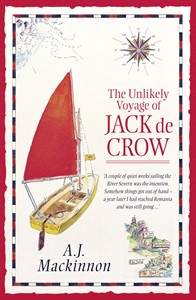 taking it on and receiving help along the way (people who write travel books invariably encounter the friendliest people in any part of the world). They emerge from the supreme battle (near death at the hands of a freighter, hangovers) to return with the boon (often a fresh understanding of culture).
This consistently different emphasis between the genders in travel writing had always puzzled me, but, oddly, I think this analogy might have solved it. To travel is to journey, and the journey has been the foundation of storytelling for centuries. I wonder often why the same type of experience continues to sell travel books, but it's because it taps into a sub-conscious resource of familiar stories.
When I started this post, I wasn't planning to write about heroes and heroines at all - it wasn't until summarising the types of travel writing that the link occurred to me. What I was going to write about was how far short so many travel books fall of the mark of being a good book. Setting and circumstance are what sell, rather than the quality of how the author tells it. Not everyone who treechanges to an overseas locale writes a book about it, and not everyone who does has the ability to tell the tale well. What they have is the licence to share the experience.


